
1.3. EDA Techniques
1.3.3. Graphical Techniques: Alphabetic
1.3.3.31. Youden Plot
1.3.3.31.1. |
DOE Youden Plot |
The Yates agorithm and the the DOE Youden plot only use the "-1" and "+1" points. The Yates agorithm is used to estimate factor effects. The DOE Youden plot can be used to help determine the approriate model to based on the effect estimates from the Yates algorithm.
- For a given factor or interaction term, compute the
mean of the response variable for the low level
of the factor and for the high level of the factor.
Any center points are omitted from the computation.
- Plot the point where the y-coordinate is the mean
for the high level of the factor and the
x-coordinate is the mean for the low level of the
factor. The character used for the plot point should
identify the factor or interaction term (e.g., "1" for
factor 1, "13" for the interaction between factors 1 and
3).
- Repeat steps 1 and 2 for each factor and interaction
term of the data.
In summary, the DOE Youden plot is a plot of the mean of the response variable for the high level of a factor or interaction term against the mean of the response variable for the low level of that factor or interaction term.
For unimportant factors and interaction terms, these mean values should be nearly the same. For important factors and interaction terms, these mean values should be quite different. So the interpretation of the plot is that unimportant factors should be clustered together near the grand mean. Points that stand apart from this cluster identify important factors that should be included in the model.
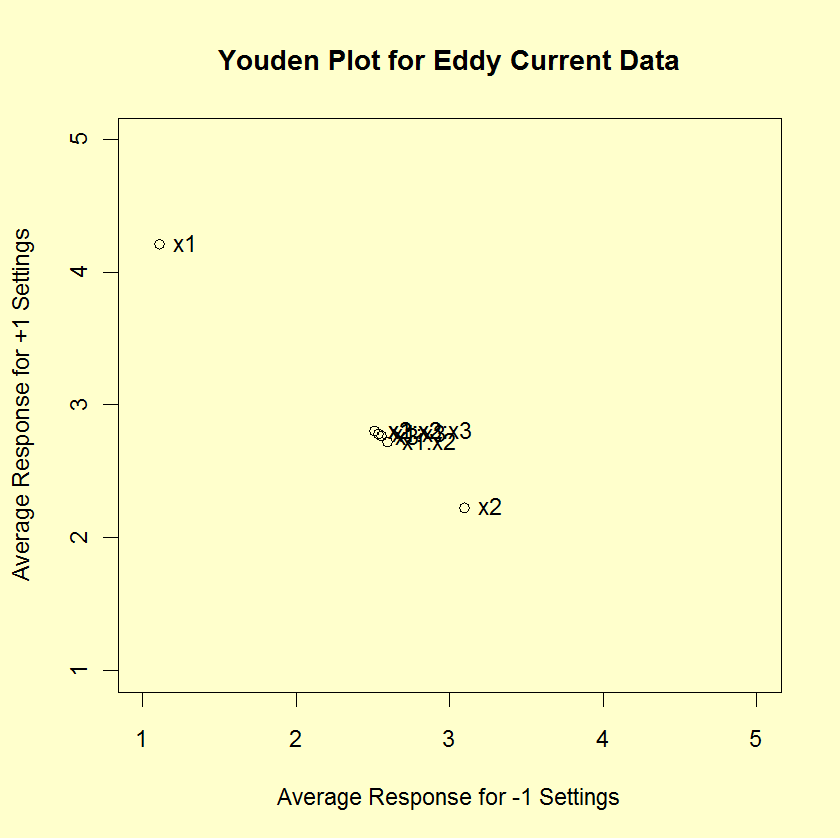
We would conclude from this plot that factors 1 and 2 are important and should be included in our final model while the remaining factors and interactions should be omitted from the final model.
